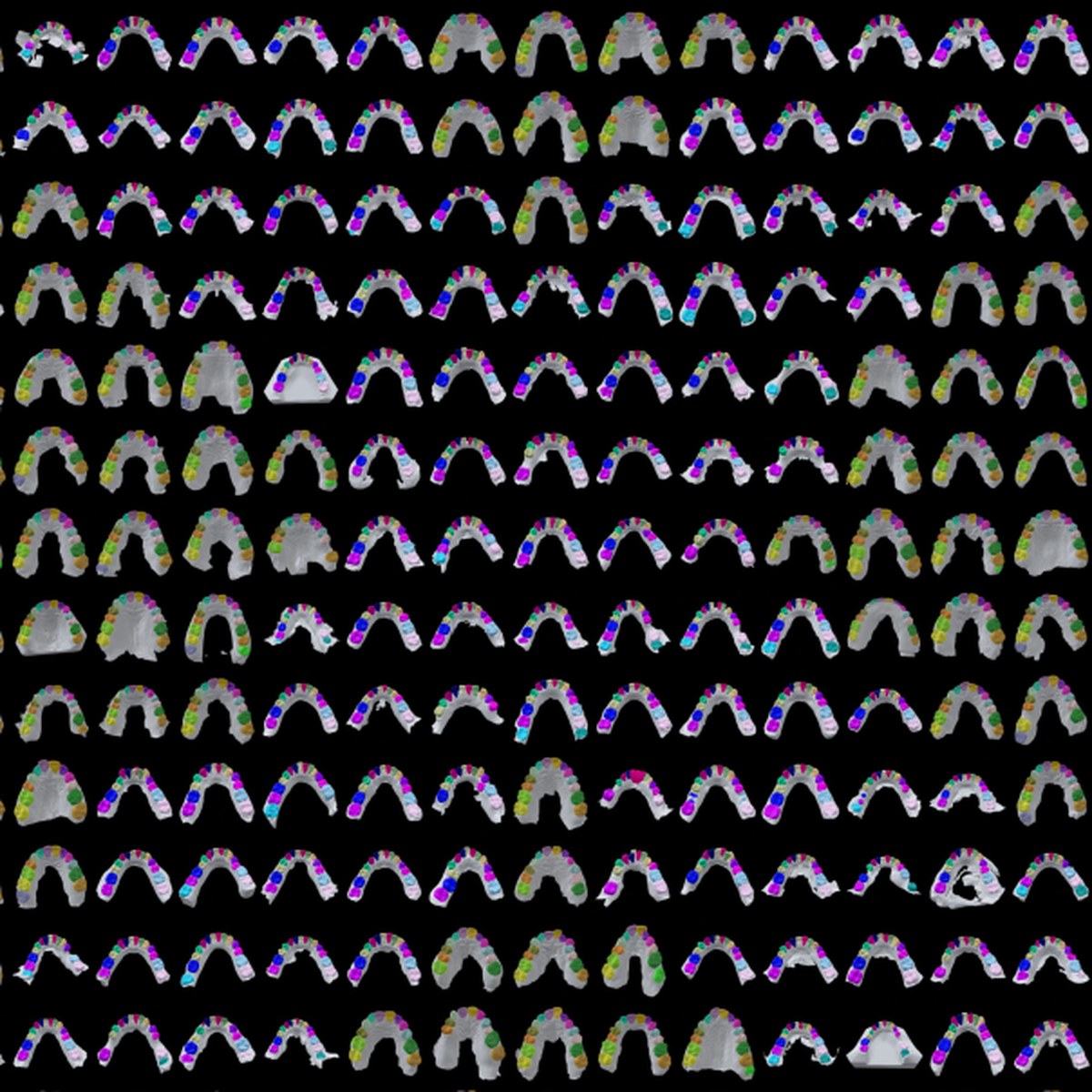
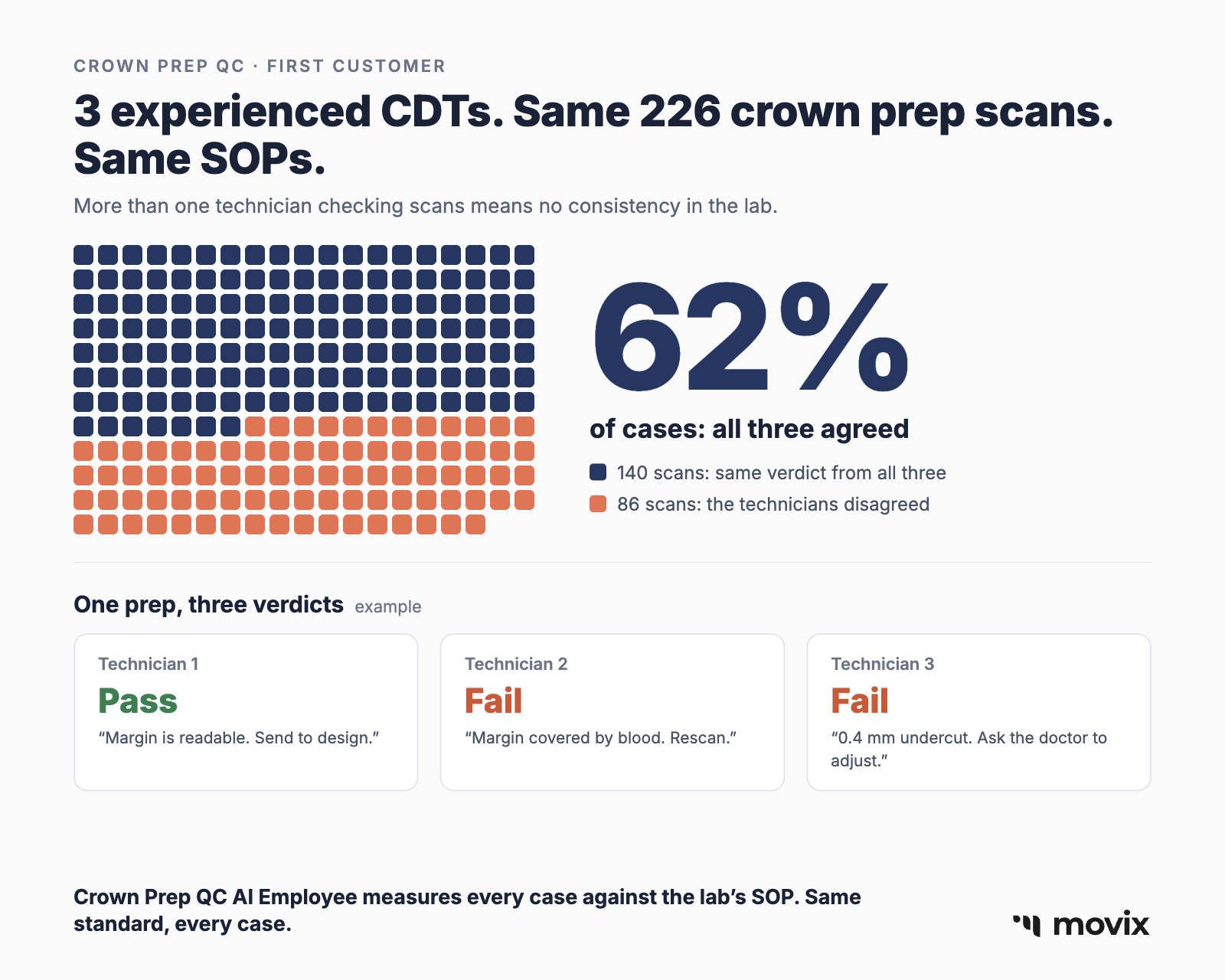
Three experienced dental technicians reviewed the same 226 crown prep scans. All of them were CDTs, not trained on the job. All of them followed the same SOPs.
They agreed on pass/fail in only 62% of cases.
This means that if you have more than one dental technician checking scans, there is no consistency in your lab.
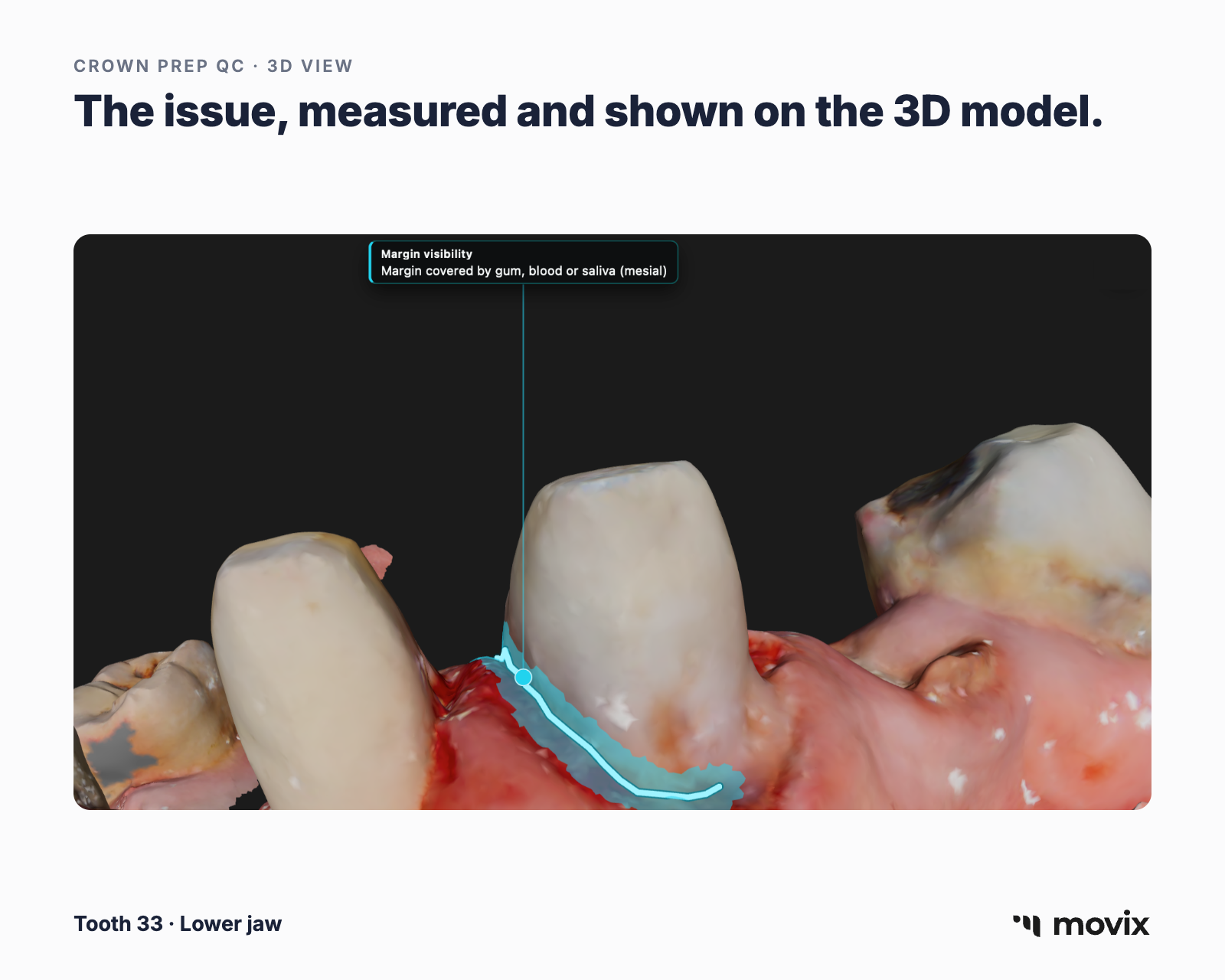
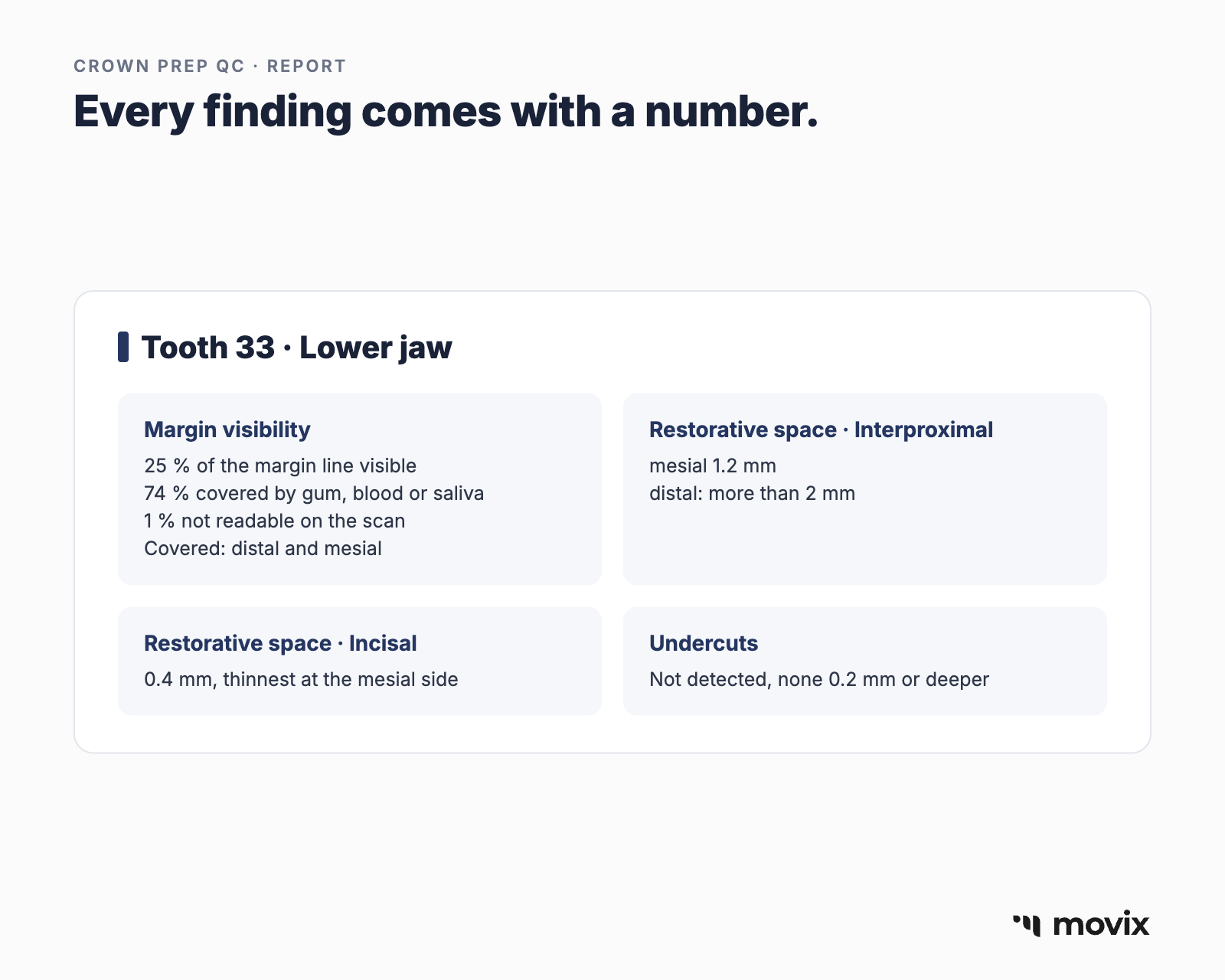
The MovixTech Crown Prep QC AI employee “stands behind the doctor’s shoulder” and checks the prep. It checks margin line visibility, restorative space (occlusal and interproximal), and undercuts - identifies the issue, measures it, provides a report and a 3D image of the issue.
Doctors leave a lab because of inconsistency.
Experienced technicians are not consistent. Every technician sees the same scan differently. In our study, three CDTs agreed on pass/fail in only 62% of cases.
Even top technicians cannot explain their rules. When we ask our customers what makes a scan good or bad, the top technicians usually cannot explain it. They say: “I cannot explain if it is good or bad. I just need to look at it.” So QC is a judgment call, and it depends on the person.
Outsourcing is cheap, but not consistent. You can outsource scan QC to the Philippines, China or other countries and get it done for cheap. But you still have to train the team, and the result depends on the people someone trained there. Cheap labor, no consistency.
The AI Employee measures every case against the lab’s SOPs. Same standard, every case, across the lab.
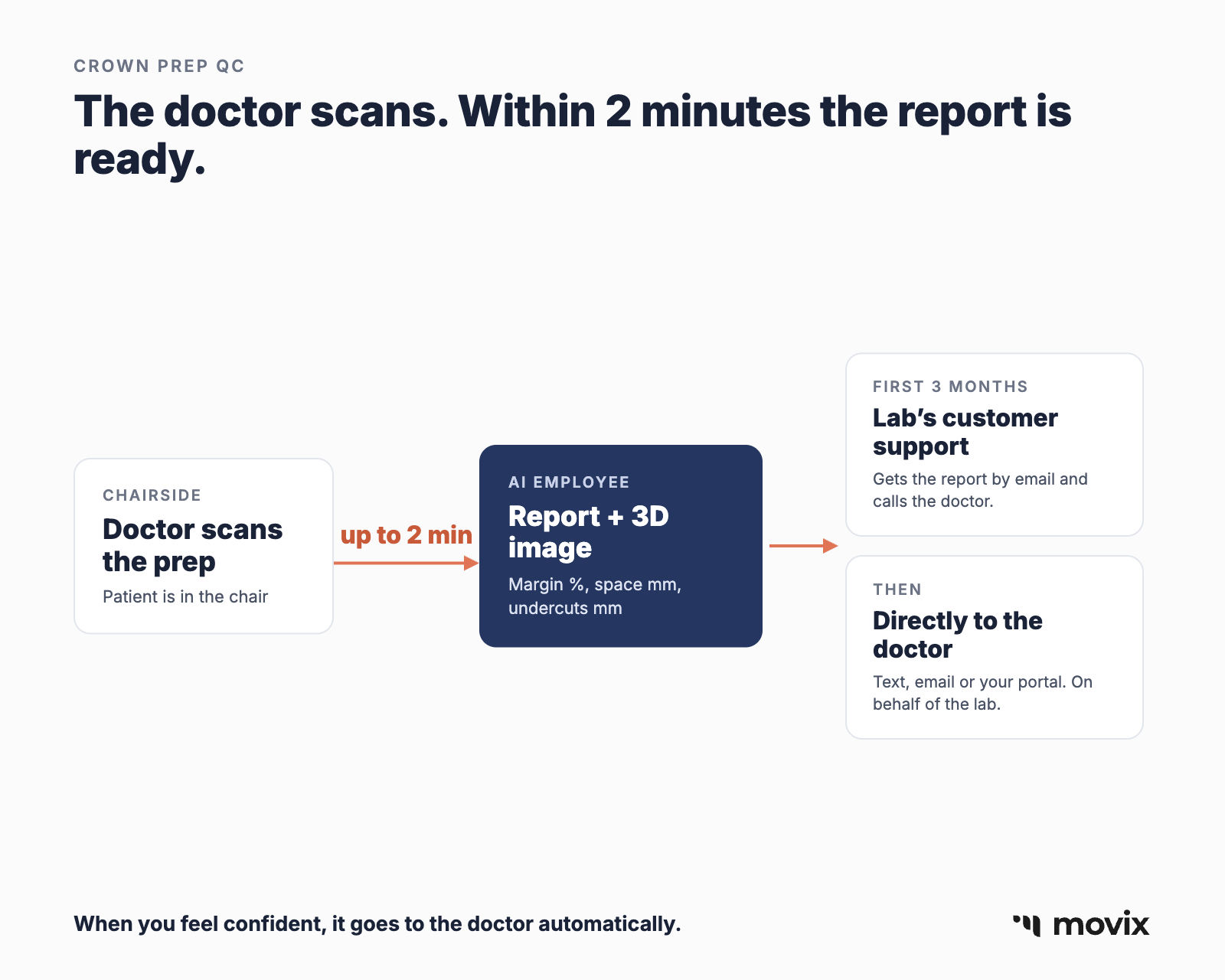
The doctor scans. In 2 minutes the AI Employee performs QC.
Faster turnaround time. At our customers, scan QC happens 36–47 hours after the doctor scans the patient. The AI Employee does it in 1–2 minutes. This cuts your turnaround time by 1–2 days.
Most labs want their customer support to talk to doctors, especially in the first 3 months. I think it is right. It is your sales point with the doctor. So at the start, the AI Employee emails the report to your customer support. Your customer support calls the doctor.
When you feel confident, the report can go to your doctors automatically, on behalf of your lab: by text message, by email, or through your portal, if you have one and doctors use it.
3. Retakes instead of remakes
Depending on the lab, about 10% of crown preps (up to 30% at DSOs) do not pass quality criteria.
If you ask the doctor for a retake an hour later, the patient has already left. There will be no retake. The doctor asks you to do something with what you have. You fix it digitally, and the crown doesn’t fit. You pay for the remake, and the doctor is unhappy.
The AI Employee checks the scan chairside, while the patient is still there. The doctor sees what exactly is wrong and fixes the prep right away. Not next week, when the patient has to come back. The chance of a retake is much higher. For the doctor this is real value from your lab.
Labor is the most impactful line on your P&L.
We recorded the screens of dental technicians at our customer labs to see where their time goes. On one scan, a technician opens the scan, reads the Rx and the doctor’s comments, finds the product and the material, and applies the criteria for it: a zirconia crown needs a different occlusal space than e.max. Then the case goes back to the doctor, or the technician starts the design.
This takes 3–4 minutes per scan. Depending on the product, it is 10–20% of a technician’s time.
The fully loaded cost of scan QC by a US technician (salary, benefits, taxes, overhead) is $2.50 per scan. With us it costs $1.10–1.80, depending on your volume.
Example: a lab with 4,800 crown preps a month.
The AI Employee takes this boring work, and your technicians use the time for other tasks.
People come and go. The function stays. Technicians leave, new ones come, and every new one needs training. With the AI Employee, scan QC is fully automated. You train it once.
Grow without hiring. You can grow your lab or buy new labs without hiring and training more people for QC. Everything keeps working the same way.
Quality of EBITDA. If you plan to sell to PE, buyers look at your EBITDA. You can raise EBITDA with cheap labor in the Philippines, or with AI automation. But buyers look at the quality of EBITDA, not only at its size.

An AI Employee that follows your rules
We train the AI Employee to follow your rules. It measures: 74% of the margin visible, 0.4 mm occlusal space, 0.3 mm undercut. Then, based on your thresholds, it decides pass or fail. One lab polishes a 0.5 mm undercut digitally. Another asks for a rescan. We set your thresholds together in the first 30 days.
A scan is not good or bad on its own. It is good or bad for the crown you are making. 0.4 mm of occlusal space is a problem for a PFM. A PFM needs 1.2 mm.
It reads the Rx and the doctor’s comments first. Very often the Rx and the doctor’s comments do not match: the Rx says one product, and the comments say another material. In 23% of Rx, the doctor gives the product information only in the comments. So the AI Employee first reads both and finds out what the doctor actually needs. Only then it performs QC.
Crown Prep QC does not require long integration. We don’t need to integrate with your LMS. We connect to your scanner portals in 2 minutes, and the Crown Prep AI Employee will be up and running. It will do quality control of all your crown preps.
We work with iTero, Medit, Shining 3D, DS Core, Dexis and AlliedStar. Your team enters the scanner credentials. We never see them.
My advice: start with one scanner. Set the thresholds with your team. Run it for a few weeks and check the results against what your technicians would have done. Then add the next scanner.
If you want, after that we can integrate with your lab management system, so you will see the QC results there too.
I’d be happy to calculate how much money your lab saves with Crown Prep QC AI Employee. Please pick a time in my Calendly.
You can also check what QC costs your lab today in our cost calculator.